
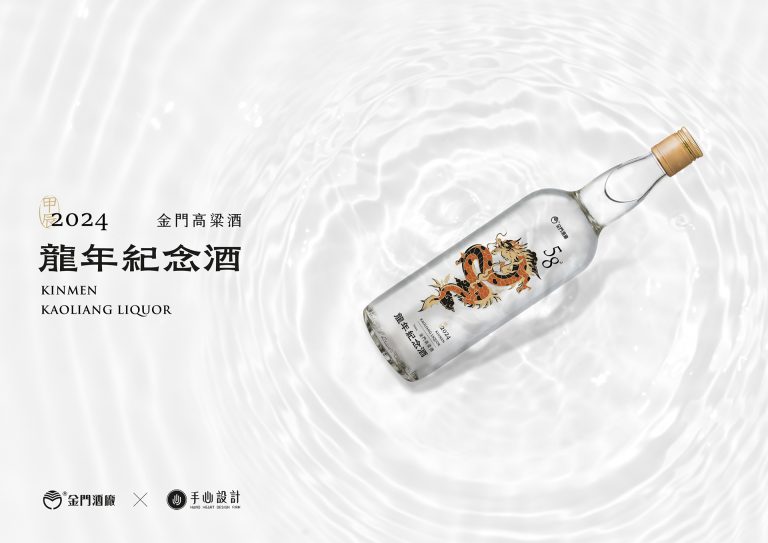
Good packaging design has to do three things at once: help the product sell, solve the shipping problem, and protect the goods. The packaging design service at Hand-Heart Design Firm covers two disciplines, structural design and visual design—from the requirements interview, confirming the contents and structural testing (load, impact, drop) to the dieline and sending the job to press. Years of hands-on print experience let us keep the quality up while bringing printing and shipping costs down. Whether it is food, spirits or a gift box, Hand-Heart can take the packaging from concept to mass production under one roof.
Packaging design is more than making the outside look good
For the same product, the packaging decides whether it gets picked up off the shelf, whether it reaches the shop undamaged, and whether it looks good enough to give as a gift. The packaging service at Hand-Heart covers both disciplines, and the work is incomplete without either of them:
Structural design—how the contents are held in place, which way the paper grain has to run so a fold does not crack, what the first movement is when the box is opened, how many units fit in a carton to match the shipping unit. These decide whether the pack arrives safely, and they also decide the cost.
Visual design—whether it is recognised on the shelf within three seconds, whether the information hierarchy is right, whether the food labelling complies, whether the finish is up to standard. These decide whether it gets bought.
Most design firms do only the visual work and leave the structure to the carton maker. Hand-Heart keeps both inside one team, because structure limits the visual, and the visual changes the structure. When the two are designed separately, the mismatch usually only shows up at the proofing stage.
A structure that works on paper does not always hold up once it is made.— which is why we insist on a physical white mock-up to find problems before volume production.
How we do packaging design
Go to the shelf first, not to the computer
We start with market research. We visit the outlets where the product actually sells, see where it sits on the shelf and which competing products surround it, and build a strategy for standing out on that shelf from what we find.
When the design is finished, we mock it up at the point of sale and check whether the packaging really sets the product apart—easy to recognise, and easy to remember.
We also look at consumer and market trends, work out what the packaging should emphasise, and set its visual communication strategy. On the print side, calibrated monitors and colour management let us control the colour accuracy of the finished piece from the proofing stage onwards.
Type, colour, illustration and layout each have their own specialist
Lettering, colour, illustration and information layout are each planned by a specialist who works in that discipline full time.
Beyond giving people something pleasant to look at, the packaging has to keep the information clear and the priorities obvious. Packaging usually has to carry a lot of messages, and when everything is a priority, nothing is. That is the most common bind in packaging design.
Find what really makes the product different
The philosophy at Hand-Heart is “seeing the value that is not seen”.
We believe that any product of good quality has a USP (unique selling proposition) waiting to be found. We study the product closely to uncover the features and strengths hidden in it, then use design to bring those strengths and selling points forward, so that the packaging Hand-Heart creates for you becomes the unfair advantage that shows what the product can do.
Three common scopes of work
Packaging projects vary widely in scope. Agree on the scope first, and the quotation and schedule will not be far off:
| A Visual only (existing structure) | B Structure + visual, single item | C Range packaging + brand extension | |
|---|---|---|---|
| When it fits | The cutting die already exists and only the label or the look changes; or one item first to test the market | A new product or a new gift box, structure and visual settled together | Several items need a family look, or the packaging needs to carry a brand update |
| Main deliverables | Final visual artwork, print-ready files, notes on how to use them | Structural drawings and the cutting die, white mock-up and test records, final visual artwork, proofs | Range structure and visual system, packaging standards, extensions (carrier bags, shipping cartons, display) |
| Indicative timeline | 3–6 weeks | 2–4 months (including proofing rounds) | From 4 months |
| Usually quoted separately | Printing | Printing; press supervision can be included | Printing, photography; corporate identity work if it has to be rebuilt |
When the budget is limited, the safest approach is to get one item right with A or B first and roll out the rest afterwards.
The packaging design process: nine stages from interview to press
Every stage has a defined output, and any stage may send the work back for revision. This is the order Hand-Heart actually works in:
- Requirements interview
First we work out what problem the packaging has to solve. Is it a better finish, a stronger sense of value, or protection against damage in transit? A different goal changes every decision that follows.
Brand imageConsumer profileSales channelPrice positioning - Research and competitor analysis
We look at how comparable products present themselves on the shelf, find where there is room to stand apart, and avoid looking so much like a competitor that the two get confused.
Packaging referencesCompeting brands - Confirming the contents
We measure the actual dimensions and quantities and confirm the copy, the labelling and the images that have to go on. Cut a corner here and the cutting die comes out wrong later.
Dimensions and quantityCopy and labellingPhotographs and imagesBrand identity - Structural design
We design the three-dimensional structure around the nature of the contents, weighing protection, convenience, the unboxing experience, paper cost and environmental considerations against each other.
ConvenienceProtectionUnboxing experiencePaper costEnvironment - Structural testing
We build a physical white mock-up and test it for load, impact, compression, drops, opening and closing, simulating the journey to the shop. A structure that works on paper does not always hold up once it is made.
LoadImpactCompressionDropOpening and closingTransport simulation - Drawing the dieline and the cutting die
We flatten the three-dimensional structure into a dieline and lay it out on the press sheet. This step directly affects how much board is used and what the printing costs. At the same time we settle the paper stock, its texture, its weight and the finishing method.
Cutting dieImpositionPaper choicePrint effects - Mock-up and structural sign-off
We build a physical sample by laser cutting or by hand, check how the contents sit, revise the structural drawing where needed, and then sign off the cutting die.
Laser-cut mock-upHand-built mock-upFit checkStructure signed off - Visual design
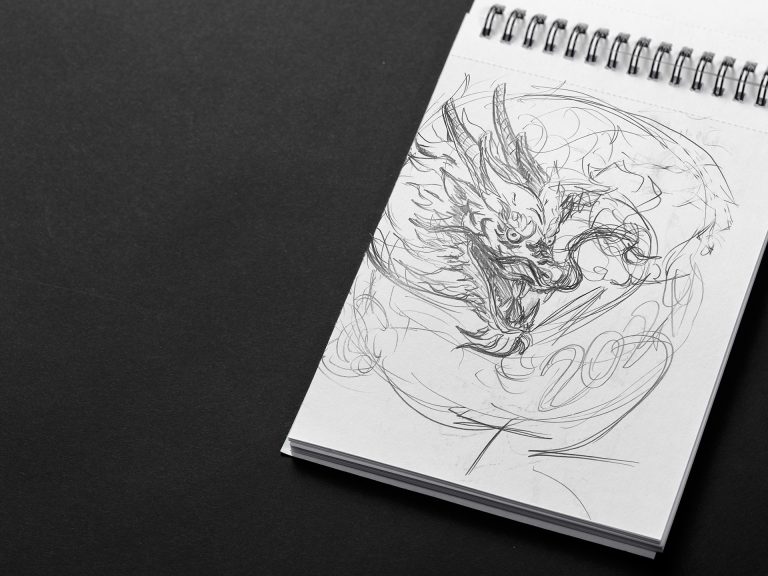
We design on the approved cutting die, from sketch to first draft, refined draft and final artwork, making sure text and images sit in the right places on the unfolded dieline.
SketchFirst draftRefined draftFinal artwork - Press proofing and press supervision
The printer produces digital proofs and dieline proofs, and we confirm the spot colours. Finally, we check colour, detail, missing characters, finishing and misregistration item by item before the job goes on to printing, die-cutting, finishing and gluing.
Digital proofSpot colourRegistration checkDie-cutting and finishing
Who is responsible for what across the nine stages
What usually goes wrong in a packaging project is not the design but the handovers: the structure is done but the visual runs into a fold line; the proof is approved and then the printer switches paper; the barcode the partner supplied turns out to be wrong, and nobody notices until just before press. So for every stage we agree three things in advance: who does the step, what the partner has to supply, and what can be put on the table and checked.
| Stage | What Hand-Heart does | What the partner supplies | What can be checked |
|---|---|---|---|
| Requirements interview | Clarifying the goal, the channel and the price positioning | Brand image, consumer profile, sales channel, price | Requirements sheet (signed by both sides) |
| Research and competitor analysis | Shelf survey, comparison with competing products | Existing packaging, list of competing products | Competitor analysis report and shelf photographs |
| Confirming the contents | Measuring dimensions, checking off copy and labelling | The physical product, copy, labelling, barcode, certification marks | Contents list (dimensions, quantity and labelling, item by item) |
| Structural design | Three-dimensional structure, protection and opening design | Shipping method, stacking and display conditions | Structural concept drawing (with a paper cost estimate) |
| Structural testing | Building the white mock-up and running the simulated tests | Real contents for the fit test | The white mock-up itself and the test records (what was done for load, drop, opening and closing, and what the result was) |
| Dieline and cutting die | Unfolding the dieline, imposition, paper selection | Print run, budget ceiling | Dieline drawing, imposition sheet, paper samples |
| Mock-up and structural sign-off | Laser-cut or hand-built mock-up | Fit confirmation and sign-off | The mock-up itself and the signed-off structural drawing |
| Visual design | From sketch to final artwork | Final copy, images, certification mark files | The drafts from each stage and the final artwork |
| Press proofing and press supervision | Digital proof, spot colours, registration check, supervision on press | Final sign-off | Press proofs, the sign-off sheet, finishing samples |
Responsibility on the manufacturing side has to be set out separately: who places the orders with the printer, the paper supplier and the finishing house, and who accepts the work. Hand-Heart can carry the whole job through to press supervision, or deliver the final artwork and leave the ordering to your company. Either works, but it should be decided at the requirements interview, because it determines who is responsible for the finished piece.
In test and mock-up records we write down only what was actually done and what the result was. We do not add numbers we never measured to make a report look better.
Packaging design work
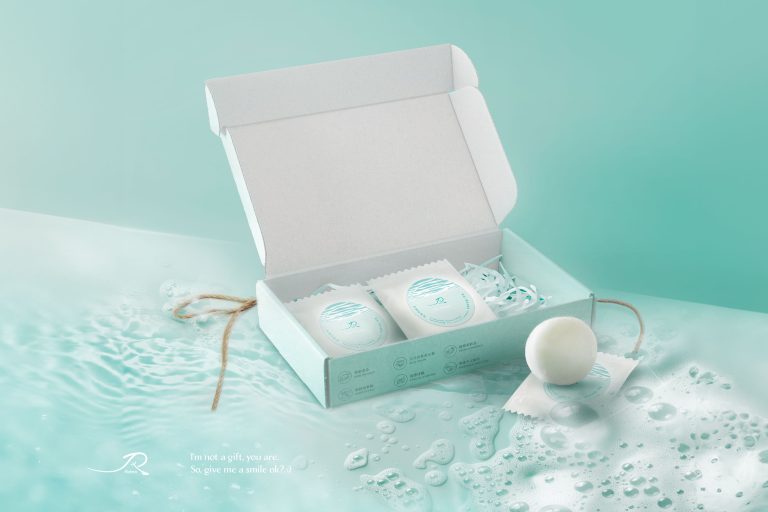
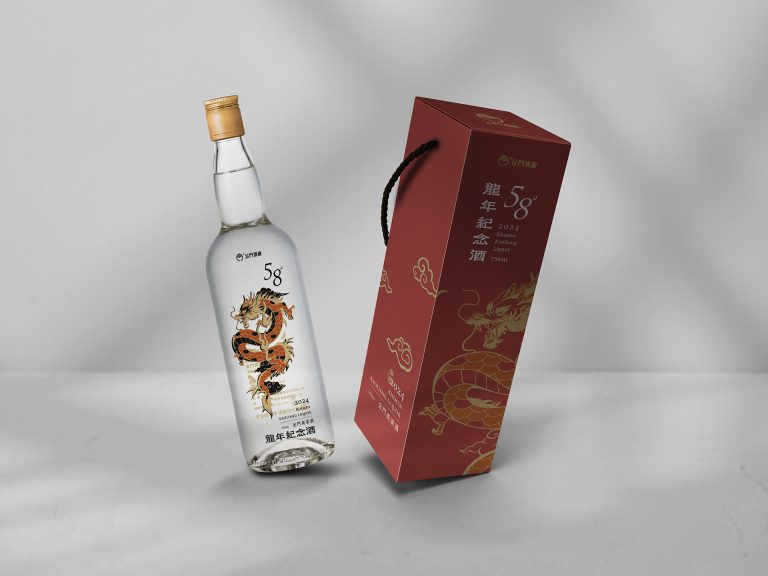
Hand-Heart has completed more than 20 packaging design projects. Packaging for alcoholic drinks is where our experience runs deepest. From the annual commemorative bottles of state-owned distilleries to beer labels, every job means handling statutory labelling, the quality of the finish and consistency in mass production at the same time. The categories cover alcoholic drinks (commemorative bottles, kaoliang, beer labels), food (biscuits, drinks) and household goods (agarwood, tableware gift boxes, bath soap).
- Kinmen Kaoliang Liquor—Year of the Dragon
Collectability and finish for an annual commemorative release
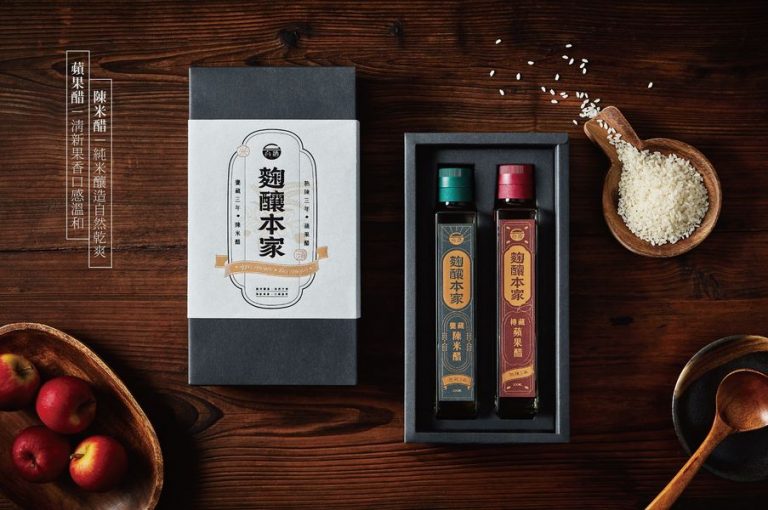 Taiwan Tobacco & Liquor—Qu Niang Ben Jia
Gift box structure brought together with brand quality
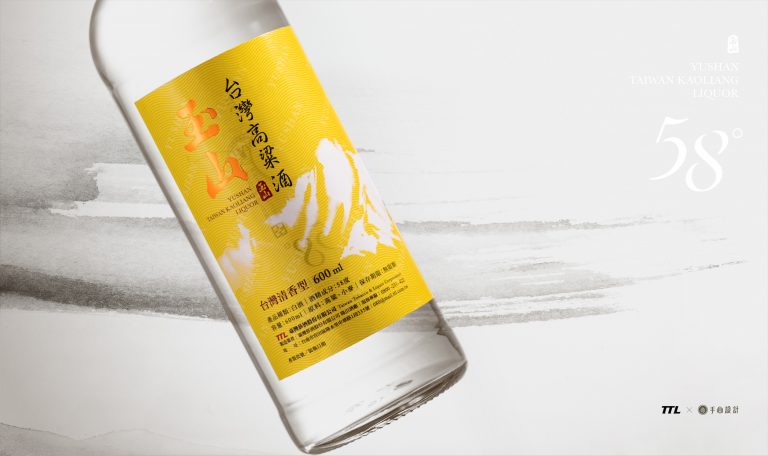 Yushan Taiwan Kaoliang
Packaging optimisation for an existing product line
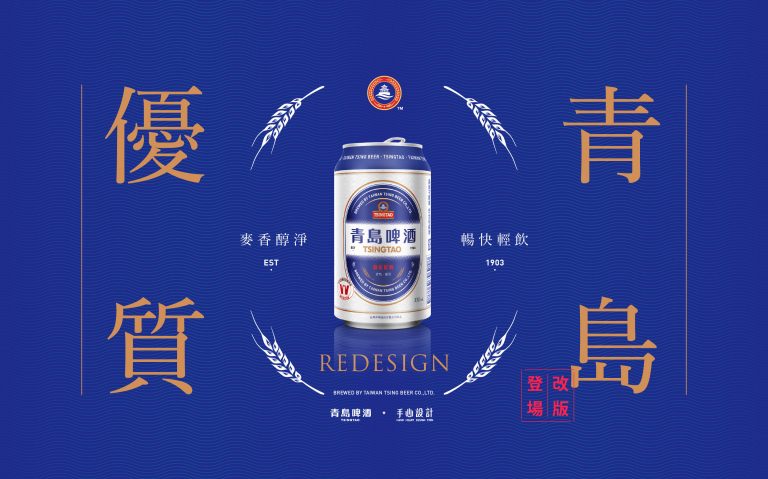 Tsingtao Beer—Tsingtao Premium
Beer labels and shelf recognition
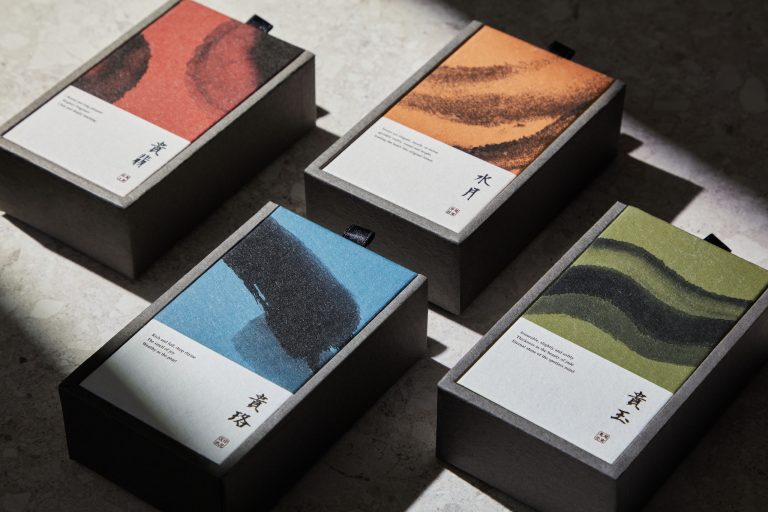 Tai He Shang agarwood
A holding structure for a high-value product
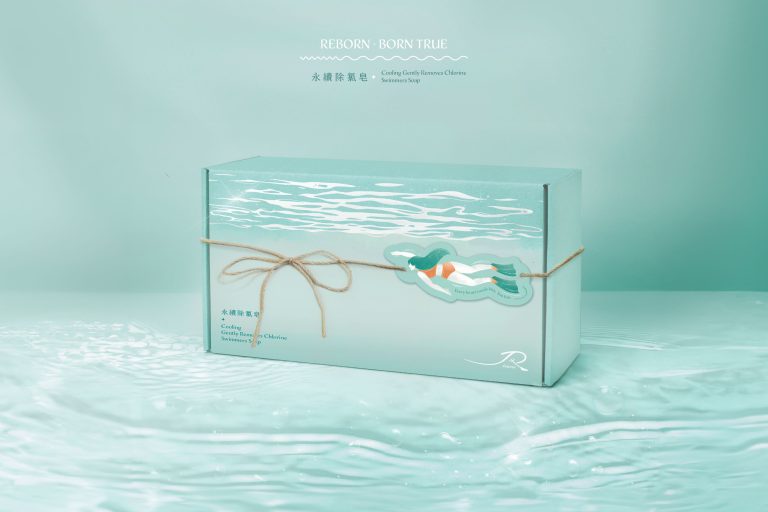 Reborn tableware
Eco-friendly materials and gift box structure
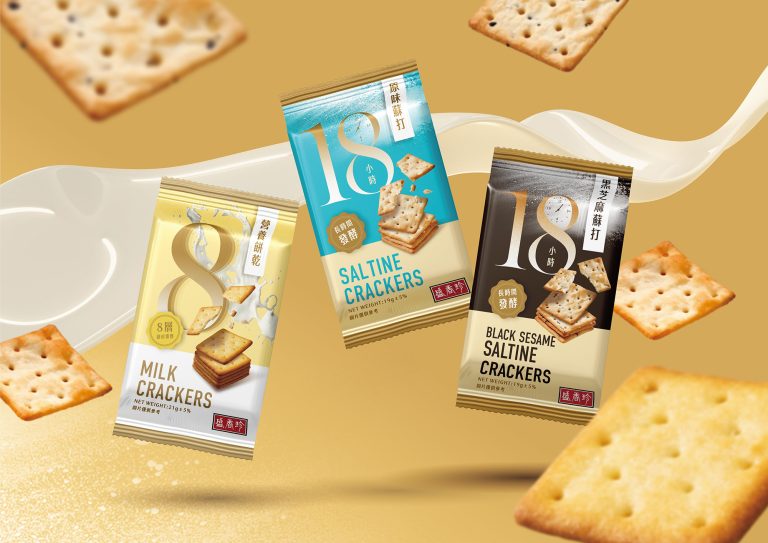 Triko soda crackers
Making the 18-hour fermentation the front-of-pack visual
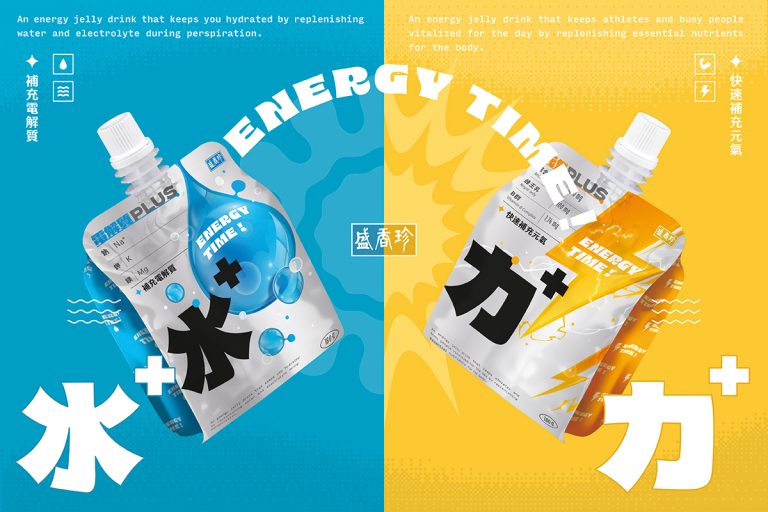 Triko Energy Time
Extending drinks packaging across a product series
The two projects below illustrate two situations: when a food product has several selling points, which one the front of the pack should show first; and when old packaging is updated, which elements should stay.
Food packaging with more than one selling point: decide what comes first—Triko soda crackers
The key feature of Triko soda crackers is the “18-hour long fermentation”, which is part of how the crackers are made. Hand-Heart turned it into the most prominent visual on the front of the pack: the number “18” is enlarged into the largest element on the front, clock markings are drawn into the upper loop of the “8”, and a round “long fermentation” seal is added. The other selling points are each given to a different element: the thin, crisp texture to photographs of stacked and broken crackers, the flavours to background colours (blue-green for original, dark brown for black sesame), and the flavour names and English product name to fixed positions.
Updating a liquor label: keep what loyal customers recognise, tidy up the rest—Yushan Taiwan Kaoliang
The label and packaging optimisation for Yushan Taiwan Kaoliang, known as “Xiao Gao”, is a project Hand-Heart carried out with Taiwan Tobacco & Liquor Corporation. So that existing customers would still recognise the packaging they knew, this was an “optimisation” rather than a redesign: Xiao Gao’s highly recognisable bright yellow was kept, the red frame around the old label was removed, the white outline of Yushan (Jade Mountain) was extended from the bottom edge of the label up to its middle, and the product name, the volume and alcohol content, and the product information were each given their own zone. Xiao Gao is still Xiao Gao, just better looking.
What to watch for when working on packaging
On the structural side
- Whether the contents are fully protected against impact, breakage, deformation, load, loss of freshness, splashing, spillage, oil seepage, temperature and humidity
- Whether the contents could be damaged in transit
- Whether the outer box holds the contents firmly, without movement
- How much board the dieline uses (a direct cost factor)
- Whether the right paper and finishing have been chosen
- Whether parts that fold or bear weight take the paper grain direction into account
- Whether it is easy to pick up and carry
- Whether the size ships efficiently (matching the standard shipping unit)
On the visual side
- Whether it matches the overall brand image
- Whether it conveys the right message
- Whether the labelling on food packaging meets the regulations
- Whether the look of the pack makes people want to buy or own it
Before we start, please have this ready
The more complete the material, the less time is spent going back and forth. This is what Hand-Heart needs to start a packaging project:
- Contents
- Actual dimensions and quantity
- Copy and images
- Product description, product photographs, company profile, product features and benefits, web address, slogan, barcode, directions for use, serving suggestions
- Food labelling
- Nutrition information, product name, ingredients, net weight or volume, date of manufacture, expiry date, manufacturer or distributor, address (see the Taiwan Food and Drug Administration food labelling handbook)
- Certification marks
- Food certifications, print certifications, material certifications, recycling marks
- Brand identity
- Existing guidelines such as the logo, wordmark, colour scheme and supporting graphics
- Sales information
- Pack sizes and pricing strategy, sales channels, and who buys the product or receives it as a gift
If a few of these are still missing, that is fine. Hand-Heart can help you work them out, including the brand identity itself.
If you plan to commission structure and visual separately, consider one thing first
To keep costs down, many brands hire one firm for the structure and another for the visual. It is a common arrangement, and we understand why.
But the mismatch usually only shows up at the proofing stage: the cutting die is already made, and the white space in the visual falls right on a fold line. At that point the only thing that can still change is the visual, because the visual came second.
Either a new cutting die is made at extra cost, or the job goes ahead as it is and the design is compromised. If the budget really is tight, we would suggest getting one item right first rather than splitting the two parts of the work; the remaining items can follow later.
Checking the labelling before the job goes to press
The statutory labelling on the pack is supplied by the brand owner, who is responsible for its accuracy. Hand-Heart checks it item by item at two stages, when the contents are confirmed and at final artwork: is everything there, does it fit, and can it be read? The items usually required are listed below; the current rules of the competent authority always take precedence:
General food—product name, name of the contents, net weight or volume, names of food additives, name, address and telephone number of the manufacturer or the domestic responsible business, country of origin, expiry date, nutrition labelling, allergen information and other items required by official announcement (under the Act Governing Food Safety and Sanitation; competent authority: Taiwan Food and Drug Administration).
Alcoholic drinks—brand name, product type, alcohol content, name and address of the importer or producer, volume, country of origin and the warning statement (under the Tobacco and Alcohol Administration Act; competent authority: National Treasury Administration, Ministry of Finance). The curve of the bottle distorts the label, so the type size of the warning has to be confirmed on a mock-up with the label actually applied.
Three more things are most often found missing just before the job goes to press: the barcode (size, quiet zone and black-and-white contrast), the recycling mark and material labelling, and the licensed artwork files for certification marks.
See the design in motion
This project film shows the design and motion work for Yi Lu Ling Xian, a kaoliang liquor made by Kinmen Kaoliang Liquor, and can be watched alongside the design notes on this page.
Which brands and organisations can use Hand-Heart’s packaging projects as a reference?
Depending on whether you are updating a brand image or extending packaging across more items, you can compare your needs with the approaches taken in the two projects below.
- If your spirits packaging needs to keep a signature brand image but reinterpret it, you can look at Yi Lu Ling Xian, a kaoliang that Kinmen Kaoliang Liquor makes exclusively for its employees: the twin-dragon image was kept and combined with imagery of water.
- If a commemorative liquor needs a bottle label, neck label, cylindrical tin and carrier bag, the commemorative liquor for the Former Tainan Waterworks, a national monument, shows an order you can follow: settle the main label visual first, then extend it to the tin, the paper bag and the neck label.
Frequently asked questions
What is the difference between packaging design and graphic design?
Graphic design deals with what happens on a flat surface. Packaging design adds a dimension: it has to become a three-dimensional object that can be produced, shipped and opened. So besides the visual, packaging design involves structural engineering (load, grain direction, dieline development), printing practice (paper, finishing, spot colours) and logistics constraints (shipping unit volume). Designing the visual without understanding the structure often means finding out at the proofing stage that it cannot be made.
How is the cost of packaging design estimated?
It depends mainly on four variables. One, whether structural design is included (designing a label and building a complete three-dimensional structure are very different jobs). Two, the number of items (a single product or a whole range). Three, how many mock-ups are made and of what kind (laser-cut mock-ups, hand-built mock-ups and printer proofs cost different amounts). Four, whether press supervision is included. The first conversation is free; we confirm the scope before quoting, and the three common scopes are shown in the table above.
Is there anything special about packaging for alcoholic drinks?
Packaging for alcoholic drinks is among the most heavily regulated types of packaging, and among the most demanding in terms of finish. The label has to meet the labelling rules for alcohol (alcohol content, volume, producer, warning statement and so on). The curve of the bottle distorts the label visually, so it has to be checked on a mock-up with the label actually applied. The outer box and the carrier bag also have to allow for the weight of the glass bottle and protect it from impact. Hand-Heart’s packaging work for alcoholic drinks includes projects for Taiwan Tobacco & Liquor Corporation, Kinmen Kaoliang Liquor, Yushan Kaoliang and Tsingtao Beer, among others.
Can you do only the structure, or only the visual?
Yes. If you already have an established die-cut structure and only need the visual design, or the other way round and only need the structural problem solved, Hand-Heart can take on either on its own. But we check first whether the other half holds up. If the existing structure has a load or grain direction problem, for example, we will tell you before we start rather than putting a good-looking visual on the wrong structure.
How long does packaging design take?
It varies a great deal with complexity. A straightforward label visual can take a few weeks; a full project with structural design, physical mock-ups and press supervision is usually measured in months. Structural testing and the mock-up rounds take the most time, and they are the part you can least afford to skip. We suggest counting back from the launch date and leaving a buffer for mock-up revisions.
Have a product that needs packaging?
Tell us about the product, the channel and your budget range, and Hand-Heart will first work out whether you need a full structural design or whether adjusting the visual is enough. The first conversation is free, and there is no obligation to go ahead afterwards.
Book a free packaging consultationOr call us on +886-7-285-7000|[email protected]
Or send us your requirements here
A short description of the product, the channel and your target completion date is enough. We reply within two working days.
Methods and project sources: Hand-Heart Design Firm. Page compiled on 27 September 2026.