
What stays, and what changes?
Shakespeare & Co.
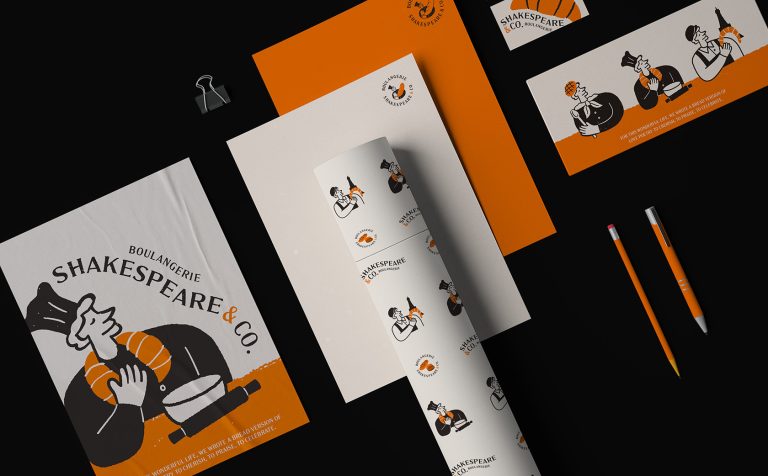
The chef, bread and cat remain. Revised proportions, a redrawn logo and a colour system bring the scattered elements together, keeping familiar characters easier to recognise.
Cao Yan Suo
Natural ingredients and cold-process soap remain the product foundation. Revised positioning and logo proportions connect those qualities to care, nature and expertise.
The short answer: rebranding is not a new logo. It redefines the relationship between a brand and its market: a systematic piece of work that runs from positioning through identity to the way you communicate. When it is done properly, long-standing customers feel the brand has got better, not that it has become something else. This guide draws on projects Hand-Heart Design Firm has carried out for KYMCO, AcBel Polytech, Radiant Opto-Electronics and Shakespeare & Co. Bakery to explain the 4 moments when rebranding makes sense, the 6 steps of the process and the 5 questions we are asked most often.
Rebranding trades recognition built up over many years for a new direction. Trade well and you move forward; trade badly and you start from zero. So before we talk about the process, three questions will tell you whether rebranding is what you need right now.
- Question 1
- Are you selling the same things, to the same people, as when the brand was created? No (a change of business, a new market, a merger, a listing) → rebranding is the right tool. Yes → read on.
- Question 2
- Do customers recognise you? And if they do, what do they get wrong? They recognise you, get nothing wrong, and you are simply tired of the look → we suggest a partial update that keeps the recognition and brings a fresh feel, not a rebrand. They recognise you but place you in the previous era, or your branches look different from one another → rebrand, or update the system.
- Question 3
- Is there internal agreement on what you want to become? No → run alignment interviews first and settle on a direction before you start; a rebrand launched now turns design into the battleground for internal disagreement. Yes → you can begin.
There is one more situation in which we will advise against it outright: the product or service itself is not yet on solid ground. Rebranding amplifies your strengths, and it amplifies your problems as well; when the image runs ahead of the experience, the gap works against the brand. Get the experience right first, then let the image catch up. If you are not sure which of these applies to you, send us your question and take thirty minutes to talk it through. Deciding afterwards not to go ahead is completely fine.
When should you rebrand? 4 common moments
Looking at the rebranding projects Hand-Heart Design Firm has taken on in recent years, companies start a rebrand at four moments more often than any other:
The company transforms and the centre of the business shifts
The brand image is still tied to the old business, and there is no way to express the new direction. Example: NTI Printing built on its strength in green printing to become a green printing concept plant; its identity forms a tree out of the negative space between stacked sheets of paper, so the change can be seen. Radiant Opto-Electronics moved to being a customer-centred provider of optical solutions and rebuilt its CIS around light extending from the inside outwards.
The image has aged and lost touch with a new generation
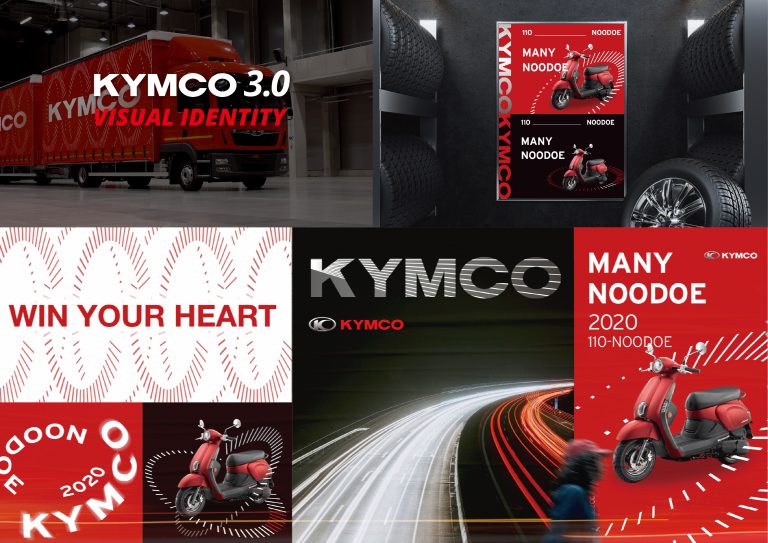
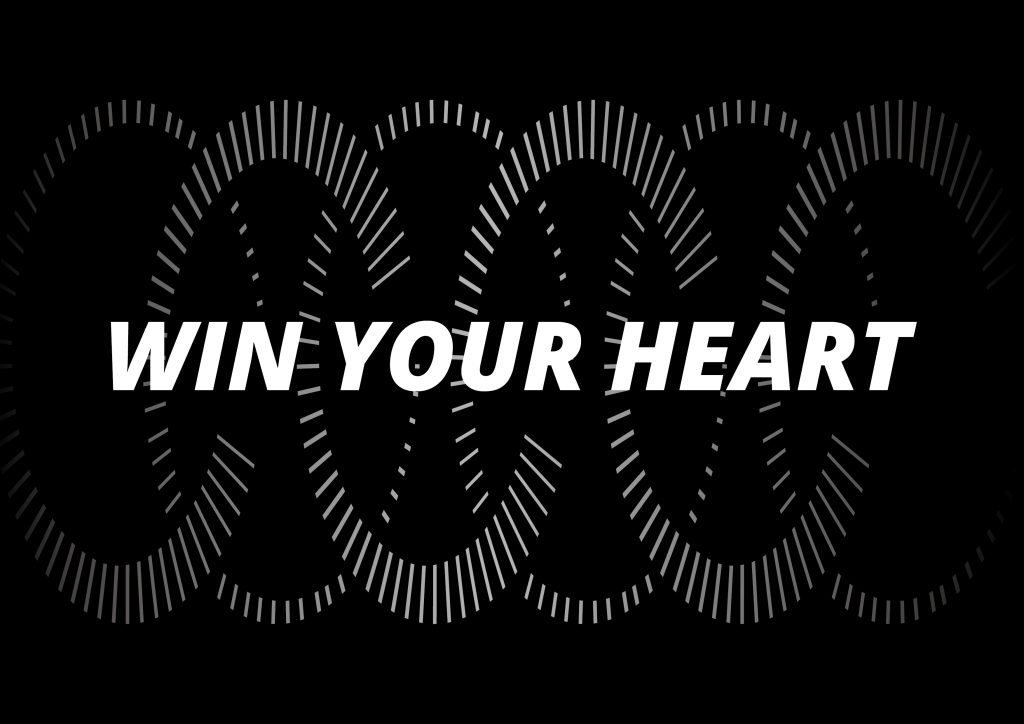
The product still holds up, but the brand looks as if it belongs to the previous era. Example: KYMCO updated both its brand and its stores around three goals: to be forward-looking, international and technology-driven. From the existing slogan Win My Heart we drew three keywords (halo, radiance and the speed of light) and turned the spirit of the brand into something customers feel as soon as they walk into a store.
The business expands fast and the image loses consistency
Every store looks different and the sense of one brand thins out. Example: the tea drink brand Sprino Tea rebuilt its identity and its stores during a period of expansion. A modular design unified the atmosphere of the space, the signage, the menu and the feature wall, so every new store afterwards had a standard to follow.
Milestones such as a listing, a merger or going international
The brand is stepping onto a bigger stage and needs an image that matches it. Example: AcBel Polytech, a major power supply manufacturer, rebranded internationally around sustainable development and innovation, and redefined its role in energy technology.
Three situations where we would suggest waiting a little longer
One: there is no internal agreement yet. Management wants a younger look, sales are afraid of losing recognition, and the second generation wants to start over. A rebrand launched now easily becomes an internal tug of war, with design as the battleground. One option is to run a round of internal alignment interviews first and begin once the direction has settled.
Two: the product or service itself is not yet on solid ground. Rebranding amplifies your strengths, and it amplifies your problems along with them. When the image runs ahead of the experience, the gap works against the brand. It may be better to get the experience right first and let the image catch up afterwards.
Three: you are simply tired of it. The recognition the market already has for you is an asset built over many years. Replacing it without a clear reason wipes out those years. Here too, a partial update is worth considering: keep the recognition and bring in a fresh feel at the same time.
Which one applies to you? If you are not sure, you are welcome to talk it through with us first. We will help you assess where things stand, and deciding afterwards not to go ahead is completely fine.
Brands that get remembered have a core you can state in one sentence
A brand that people remember and recognise should have core values and a mind identity (MI) that are simple, clear and easy to understand: one sentence that lets everyone grasp what the brand stands for.
Hand-Heart emphasises seeing the value that cannot be seen. We build brand value in four directions: up, down, in and out, meaning upstream, downstream, inside the organisation and out to the market.
A good mind identity should draw out as much goodwill from partners as possible. That is what gives a brand its cohesion. Get this part right and the visual work that follows has something to carry.
How does a rebranding project run? 6 steps
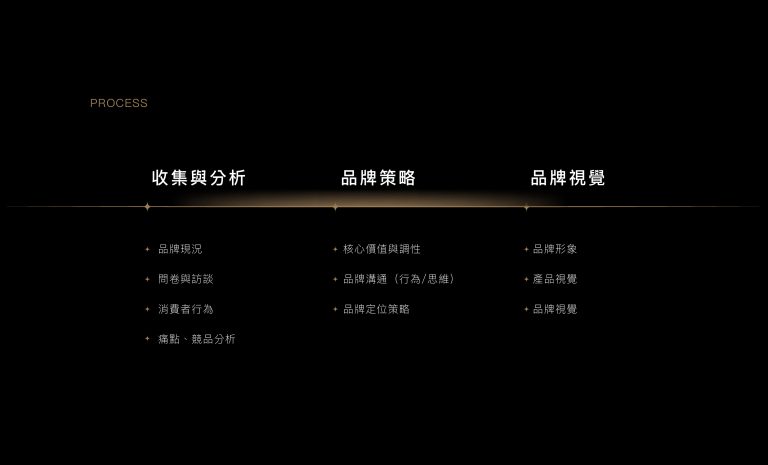
Hand-Heart Design Firm runs a rebrand in six steps. Each step has a defined deliverable, and projects with a wide scope are usually measured in months:
Brand check-up and research
Interviews with the owners, customer questionnaires and market analysis show which assets to keep and which baggage to shed. For the Shakespeare & Co. Bakery rebrand, Hand-Heart used more than two hundred questionnaires and interviews with the founder to arrive at three core values: quality, life and feeling.
Repositioning and brand strategy
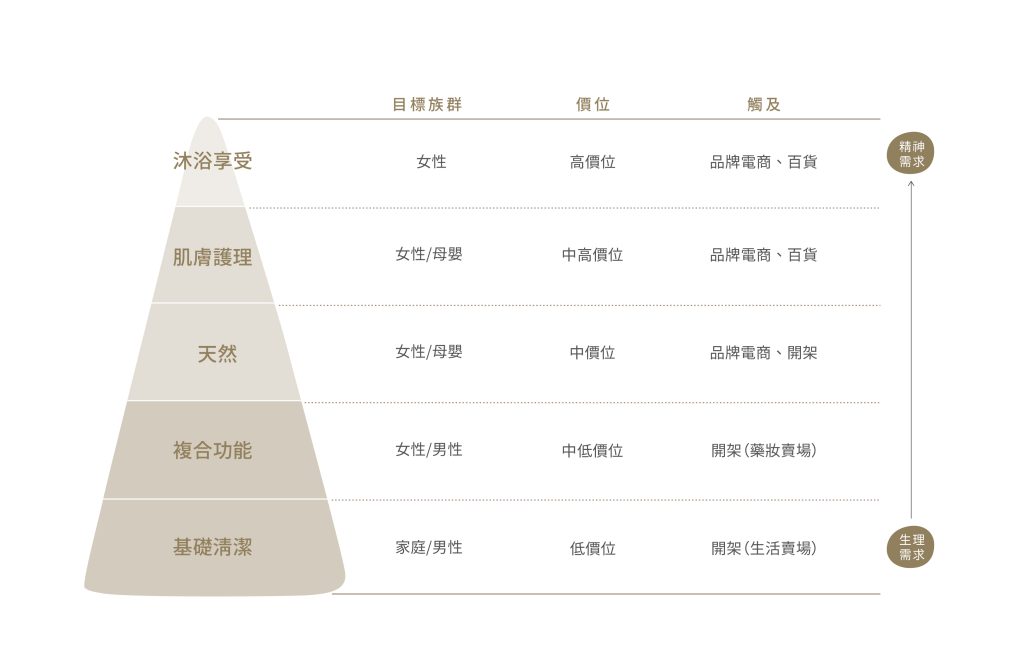
This step answers who the brand speaks to, and in what manner. For Cao Yan Suo, a brand of natural cold-process liquid soap, we redefined the positioning and settled on the audience before any design began. With strategy first, the design does not end up attractive but ineffective.
Rebuilding the identity system
The logo, wordmark, colour plan and supporting graphics are redesigned to fit the new positioning. When we updated the CIS for Radiant Opto-Electronics, the concept was light extending from the inside outwards, with sharp turns expressing strength in research and development and soft curves expressing openness to collaboration.
Applications and brand guidelines
The identity is applied to real touchpoints such as business cards, packaging, the website and vehicle liveries, and written up in a brand guidelines manual. When we built the brand assets for PORClean, the image guidelines and the communication strategy system were set at the same time, so the internal team and suppliers had something to work from.
Extending the brand into spaces and stores
For retail and service brands, the store is where customers physically step into the brand. The KYMCO and Sprino Tea rebrands both extended to store circulation, signage and display, using modular design so that it can be repeated across many sites.
Communication inside and out, then launch
We plan the pace of the changeover and the launch communication, so that staff understand it first and the market sees it after. The last mile of a rebrand is the organisation being able to say why it changed; only then does the brand story hold.
Which rebranding projects has Hand-Heart Design Firm worked on?
Hand-Heart Design Firm is a brand design company based in Kaohsiung with more than 500 brand and wayfinding projects behind it, and its work has been recognised by the Red Dot Design Award in Germany, the iF Design Award and the GOOD DESIGN AWARD in Japan. Below are representative rebranding projects from recent years; click through for the full process:
- 2023KYMCO brand identity rebranding and store design
A full brand and store update for the leader of the motorcycle industry
 2023Shakespeare & Co. Bakery rebranding
A rebrand with warmth, its core values drawn from 200+ questionnaires
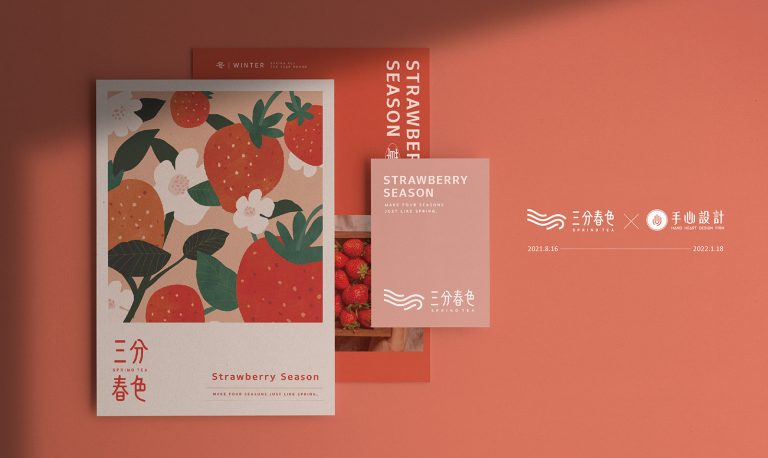 2023Sprino Tea rebranding and store design
A modular identity unified across a tea drink chain during expansion
 2024Cao Yan Suo brand strategy and rebranding
Repositioning a natural cold-process liquid soap
 2024PORClean brand image renewal
Building brand assets for a water flosser technology brand
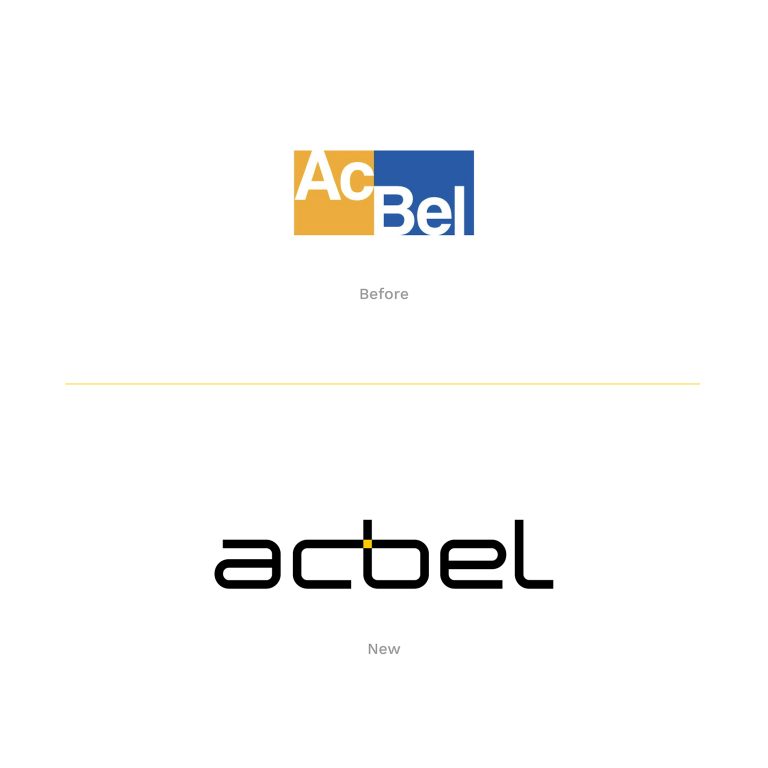 2025AcBel Polytech international rebranding
Redefining a role in energy technology through sustainability and innovation
04-768x512.jpg) 2025NTI Printing rebranding
2025NTI Printing rebrandingAn identity for the move to a green printing concept plant
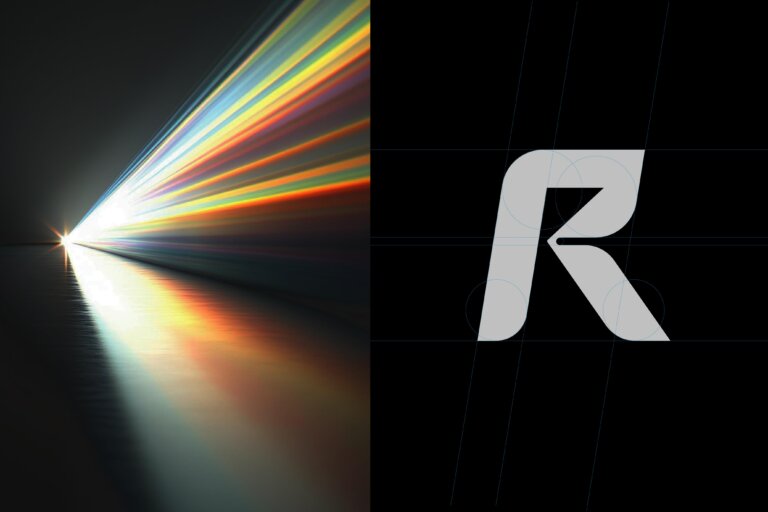 2026Radiant Opto-Electronics CIS brand identity update
A listed company identity update built on light extending from the inside outwards
The word aesthetics originally meant the science of sensory knowledge
When Alexander Gottlieb Baumgarten, the father of aesthetics, introduced the term Aesthetics, it meant the science of sensory knowledge: not personal taste, but the study of how people come to know the world through the senses.
So we believe that beautiful things should give pleasure to the senses, and that this can be analysed and designed.
During a rebrand we examine whether every touchpoint of the brand delivers a consistent and pleasant experience, use a customer journey map to find the points that can be improved, and treat design as the main way to improve the experience, rather than a coat of paint applied at the end.
What is rebranding?
Rebranding means a company rebuilding its brand systematically, usually on three levels: adjusting the brand positioning (answering again who we are and who we speak to), updating the brand identity (the visual system of logo, colour, type and supporting graphics), and changing how the brand communicates outwards (tone, channels, application guidelines). The aim is for the impression in the customer’s mind to change as well, not only the appearance.
Rebranding is different from a brand refresh: if the problem is only that the visuals have aged and look dated, refreshing the existing identity is enough; if the problem lies in blurred positioning, a disconnect from the market, or a business that has already changed shape, a real rebrand is what is needed. The table below shows how to tell them apart.
| Brand refresh | Rebranding | |
|---|---|---|
| Problem it solves | Visuals have aged, details look dated | Blurred positioning, a disconnect from the market or a new generation, a change of business |
| Scope of change | Part of the visuals (type, colour, layout) | Positioning + identity system + application guidelines + communication strategy |
| Main deliverables | An updated set of visuals | Brand strategy, a full identity system, a brand guidelines manual, a rollout plan |
| When it fits | The direction is right; the brand has simply worn thin | The current image cannot carry the brand where it is going |
Does the old logo have to be replaced entirely in a rebrand?
Not necessarily. First check whether the old mark contains elements that customers already recognise and that do not conflict with the new direction. If it does, keep them and build them into the new identity system. Only if it does not, or if the old mark itself stands for the positioning you are leaving behind, is a complete redesign needed.
The international rebrand of AcBel Polytech is an example of keeping old elements. It took the corporate vision “Accelerate Better Living” as its starting point: the new logo uses a modern, streamlined design language while bringing in the two colour blocks of the original mark, and adds a “+” symbol together with imagery of light and batteries, so that the brand’s heritage and its transformation can be seen in one identity. Hand-Heart also worked on the form and colour system and on the motion design.
In other projects, the weight of the rebrand falls on positioning and standards. The PORClean brand image update steps away from the “functional” positioning common to water flossers, speaks to the market instead through the experience of using the product and the lifestyle it reflects, and sets standards such as the brand colours and designated typefaces.
If you are not sure what to keep, go back to the three questions at the start of this page: whatever customers recognise and do not get wrong is usually an asset worth keeping.

See the design in motion
This film shows the design of the AcBel project in motion; watch it alongside the design notes on this page.
Which companies can learn from the Tintin Drugstore and Rayfu identity updates?
Companies that need to clarify their core brand values, or to carry their identity through to their website, can pick an approach from the two situations below.
- If your pharmacy is preparing to update its identity but still needs to clarify its core values internally, you can follow the Tintin Drugstore brand identity project and start by interviewing decision-makers, department heads and front-line pharmacists.
- If your company has already settled on its logotype and colours and is about to update its website, the Rayfu × Chen Nan Iron Wire identity update shows how one identity language was extended into three key visuals for the website.
Rebranding FAQ
How is rebranding different from changing the logo?
Changing the logo updates only the visual symbol, and it is the outermost layer of a rebrand. A full rebrand goes back to positioning and core values first, redefines who the brand speaks to and what it says, and then updates the identity system, the application guidelines and outward communication in turn. If the only problem is that the visuals have aged, a partial brand refresh is enough.
When is a good time to rebrand?
Four common moments: the company transforms or the centre of the business shifts (NTI Printing moving into green printing), the brand image ages and loses touch with a new generation (KYMCO), rapid expansion makes the image inconsistent (Sprino Tea), and milestones such as a listing, a merger or going international (AcBel Polytech).
Will rebranding stop long-standing customers recognising us and cost us our existing audience?
A rebrand done well is renewal within continuity. Hand-Heart starts with research to find the asset customers value most and then amplifies it: in the Shakespeare & Co. Bakery project, 200+ questionnaires produced quality, life and feeling as the basis of the new identity; in the KYMCO project, the spirit of the brand was drawn from the existing slogan Win My Heart and then translated into a new visual language. Keep the core that customers identify with, update the expression that has dated, and long-standing customers feel the brand has got better, not that it has become something else.
Do small and medium-sized or local brands need rebranding too?
Yes, and the benefit is often more visible. Shakespeare & Co. Bakery, Sprino Tea and Cao Yan Suo are all local brands of small or medium size; repositioning and rebuilding the identity gave them a clearly differentiated position for opening stores, expanding channels or speaking to the market.
How are the cost and the schedule of a rebrand estimated?
There is no fixed price. Four variables decide it: the scope (identity only, or strategy, guidelines and store rollout as well), the number of applications, the depth of research (questionnaires, interviews, market analysis) and the complexity of the rollout (several sites need guidelines and training). A comparison of three common scopes of work is on the brand design page. The first conversation is free, and we quote once the scope has been defined against your actual needs.
Wondering whether your brand should be rebranded?
Tell us your situation and Hand-Heart will tell you honestly whether you need a full rebrand or whether a refresh is enough. The first conversation is free, and deciding not to go ahead afterwards is fine.
Book a free brand consultationOr call us on +886-7-285-7000 | [email protected]
A next step for your project
CI/CIS Procurement and Acceptance Guide: Six Stages, Eighteen Checkpoints